But the Band still came:
The celebrant for the Mass was H.E. Matteo Maria Zuppi, an auxiliary bishop of the Diocese of Rome.
Pictures from the Basilica and the Mass are below:


 |
| Fr. Luke Turon, 1963, Pakistan |


...And I answer you with two essential elements about how to recognize a vocation to the priesthood or to consecrated life. Pray and walk in the Church. These two things go together, they are intertwined. At the origin of consecrated life there is always an intense experience of God, an experience that isn’t forgotten, which is remembered throughout one’s life! It’s the one Francis had. We can’t calculate or plan this. God always surprises us! It’s God who calls, but it’s important to have a daily relationship with Him, to listen to Him in silence before the Tabernacle and in the depth of our being, to speak with Him, to approach the Sacraments. To have this familiar relationship with the Lord is like having the window of our life open, so He has us hear his voice, what he wants from us. It would be lovely to hear you, to hear the priests present here, the Sisters … It would be very lovely, because each story is unique, but they all begin from an encounter that illumines in depth, which touches the heart and involves the whole person: affection, intellect, senses, everything. The relationship with God is not about a part of ourselves, but the whole of ourselves. It’s such a great love, so beautiful, so true, that it merits all, it merits all our trust. And I would like to say something forcefully, especially today: virginity for the Kingdom of God isn’t a “no,” it’s a “yes”! Of course, it entails the giving up of a conjugal bond and one’s own family, but at the base there is the “yes,” as the answer to Christ’s total “yes” to us, and this “yes” renders one fruitful.
However, here at Assisi there is no need for words! Francis is here, Clare is here, they speak! Their charism continues to speak to so many young people in the whole world: young men and young women who leave everything to follow Jesus on the way of the Gospel.A beautiful expression of the call to this form of life in the Church.
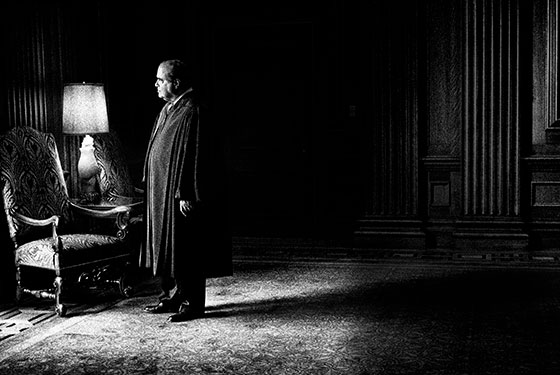
You believe in heaven and hell?
Oh, of course I do. Don’t you believe in heaven and hell?
No.
Oh, my.
Does that mean I’m not going?
[Laughing.] Unfortunately not!
Wait, to heaven or hell?
It doesn’t mean you’re not going to hell, just because you don’t believe in it. That’s Catholic doctrine! Everyone is going one place or the other.
But you don’t have to be a Catholic to get into heaven? Or believe in it?
Of course not!
Oh. So you don’t know where I’m going. Thank God.
I don’t know where you’re going. I don’t even know whether Judas Iscariot is in hell. I mean, that’s what the pope meant when he said, “Who am I to judge?” He may have recanted and had severe penance just before he died. Who knows?
Can we talk about your drafting process—
[Leans in, stage-whispers.] I even believe in the Devil.
You do?
Of course! Yeah, he’s a real person. Hey, c’mon, that’s standard Catholic doctrine! Every Catholic believes that.
Every Catholic believes this? There’s a wide variety of Catholics out there
…If you are faithful to Catholic dogma, that is certainly a large part of it.
Have you seen evidence of the Devil lately?
You know, it is curious. In the Gospels, the Devil is doing all sorts of things. He’s making pigs run off cliffs, he’s possessing people and whatnot. And that doesn’t happen very much anymore.
No.
It’s because he’s smart.
So what’s he doing now?
What he’s doing now is getting people not to believe in him or in God. He’s much more successful that way.
That has really painful implications for atheists. Are you sure that’s the Devil’s work?
I didn’t say atheists are the Devil’s work.
Well, you’re saying the Devil is persuading people to not believe in God. Couldn’t there be other reasons to not believe?
Well, there certainly can be other reasons. But it certainly favors the Devil’s desires. I mean, c’mon, that’s the explanation for why there’s not demonic possession all over the place. That always puzzled me. What happened to the Devil, you know? He used to be all over the place. He used to be all over the New Testament.
Right.
What happened to him?
He just got wilier.
He got wilier.
Isn’t it terribly frightening to believe in the Devil?
You’re looking at me as though I’m weird. My God! Are you so out of touch with most of America, most of which believes in the Devil? I mean, Jesus Christ believed in the Devil! It’s in the Gospels! You travel in circles that are so, soremoved from mainstream America that you are appalled that anybody would believe in the Devil! Most of mankind has believed in the Devil, for all of history. Many more intelligent people than you or me have believed in the Devil.
I hope you weren’t sensing contempt from me. It wasn’t your belief that surprised me so much as how boldly you expressed it.
I was offended by that. I really was.

Dominic had a new conception of religious life. Its purpose was the preaching of sacred doctrine and the salvation of souls. The sublime office of preacher had never before been the goal of any Order. Preaching belonged by divine right to bishops, the authoritative teachers of sacred doctrine. Dominic was given authority to establish preaching as the goal of his Order by the universal bishop of Christendom, the Holy Father. In order to attain such a goal, Dominic took the three means he knew as a Canon Regular, namely solemn vows, regular life with its monastic observances and solemn recitation of the divine office. To these the added the new element of study; this was necessitated by the special goal of preaching. Study, therefore, was the new feature in St. Dominic's way of life.


